Boundaries of Economic and Emotional Support Amid Academic Anxiety: A Parent-Child Metaphysics Perspective
把这篇文章落到自己身上验证:先看结构,再进入个人分析,不做泛泛阅读。
Why This Decision Is Especially Difficult in This Scenario
Defining the intensity of economic and emotional support amid academic anxiety is a central challenge faced by many families today. The compounded pressure of internal competition and societal expectations often traps parents in the misconception that "the more investment, the greater the success," overlooking differences in their children’s individual abilities and psychological endurance, thereby exacerbating capability mismatches and parent-child goal conflicts.
In real-world parenting, parents’ emotional attachment and intergenerational expectations often raise the standards for investment, resulting in extremes of overprotection or excessive pressure. If such psychological biases are not effectively identified and managed, they can easily lead to a decline in children's mental health, manifested as anxiety, depression, or even behavioral disorders.
Metaphysical structures offer a rhythmic and energy distribution reference, especially through the strength of the Day Master, the Yong Shen, and the combinations of Da Yun and Liu Nian, which can reflect an individual’s internal stress resistance and external environmental support needs. By reasonably interpreting these factors, parents can more precisely grasp the boundaries of support intensity, avoiding blind investment or neglecting risks.
At the same time, the multiple overlapping effects of academic pressure complicate decision-making. Economic input and emotional support are not simply additive but result from systemic interactions under metaphysical rhythms and psychological dynamics. Therefore, this decision must consider the child’s psychological state, the quality of the parent-child relationship, and the realistic pressures of the social environment.
Three Core Dimensions of Metaphysical Judgment
First, the strength and pattern type of the Day Master are key to judging a child’s internal resources and ability to cope with academic pressure. A relatively strong Day Master usually indicates the individual has strong autonomy and stress resistance, maintaining psychological resilience in high-pressure environments; a relatively weak Day Master suggests a need for more external support, especially careful control of emotional support boundaries to avoid psychological burdens caused by overdependence.
Second, the Yin stars (印星, Pian Yin / Zheng Yin) and Bi Jie stars (比肩/劫财, Bi Jian / Jie Cai) represent parent-child attachment and peer support relationships. A strong Yin star generally symbolizes a good attachment foundation, helping the child gain a sense of security and buffering negative emotions caused by academic anxiety. A strong Bi Jie star indicates the child has strong self-expression and autonomous regulation abilities, allowing parents to appropriately loosen control and reduce excessive intervention.
Third, the Guan Sha stars (官杀, Zheng Guan / Qi Sha) and Shi Shang stars (食神/伤官, Shi Shen / Shang Guan) reflect authority pressure and expressive release. A chart with strong Guan Sha stars often corresponds to high external authority pressure (such as from school or parents), requiring strict boundaries on support intensity to prevent excessive stress accumulation. Strong Shi Shang stars suggest the child has strong creativity and emotional release channels, suitable for more flexible economic and emotional support.
Additionally, the interaction between Da Yun and Liu Nian is extremely important. Stable Da Yun phases provide opportunities to maintain achievements, suitable for keeping support intensity steady and avoiding drastic adjustments. When Liu Nian shows clashes or combinations, it indicates increased environmental fluctuations; parents need to keenly observe their child’s psychological signals and timely adjust economic and emotional support intensity to avoid blindly following trends or indulgence.
Three Real Birth Chart Cases
Case 1: The Day Master is 壬 (Ren, Water), relatively strong, belonging to the Qi Sha (Seven Killings) pattern, with Yong Shen being Earth and Fire, and Ji Shen (unfavorable element) being Metal. Currently in the 9th year of the 庚午 (Geng Wu) Da Yun, a stable maintenance luck phase, with the Liu Nian being 丙午 (Bing Wu). The Qi Sha pattern symbolizes the child bearing strong authority pressure. The relatively strong Day Master shows some internal stress resistance, but the presence of Ji Shen Metal suggests external environmental factors may consume the child’s energy. In the parenting dynamics of academic pressure and school advancement anxiety, such children tend to feel significant Guan Sha pressure. Parents should strictly limit economic and emotional support to avoid negative backlash from over-intervention, especially during years with obvious Liu Nian clashes, paying close attention to changes in the child’s psychological state and cooperating with professional psychological counseling for risk management.
Case 2: The Day Master is 乙 (Yi, Wood), relatively weak, belonging to the Zheng Cai (Proper Wealth) pattern, with Yong Shen being Water and Ji Shen being Fire and Earth. Currently in the 6th year of the 癸酉 (Gui You) Da Yun, a favorable luck phase, with the Liu Nian being 丙午 (Bing Wu) supporting the flow. The Zheng Cai pattern indicates the child relatively depends on external resources and support. The weak Day Master suggests insufficient internal energy to fully cope with academic pressure autonomously. The Yong Shen Water helps to nourish Wood, alleviating tension. This chart structure suits parents giving relatively high economic and emotional support but should avoid overprotection that increases the child’s dependency. It is recommended that parents focus on cultivating the child’s autonomy during support, timely guiding self-regulation abilities, and combining professional counseling to ensure support intensity does not become a psychological burden.
Case 3: The Day Master is 甲 (Jia, Wood), relatively strong, belonging to the Jie Cai (Rob Wealth) pattern, with Yong Shen being Fire and Ji Shen being Water. Currently in the 1st year of the 戊辰 (Wu Chen) Da Yun, a stable maintenance luck phase, with the Liu Nian being 丙午 (Bing Wu). The Jie Cai pattern shows the child has strong self-competitive awareness and stress resistance, reinforced by the relatively strong Day Master. The Yong Shen Fire emphasizes the need to stimulate internal motivation and creativity, while Ji Shen Water warns that emotional fluctuations may bring adverse effects. In the parenting dynamics of academic anxiety, parents can appropriately increase economic and emotional support but should be careful to avoid conflicts caused by excessive emotional intensity. Support boundaries should be flexibly adjusted, focusing on the child’s emotional management and stress release, cooperating with psychological counseling when necessary to ensure mental health.
Common Misjudgments and Blind Spots in This Scenario
A major misjudgment occurs when the metaphysical structure is weak: parents often, driven by guilt or expectations, excessively amplify economic and emotional support, neglecting the child’s actual need for autonomy cultivation. This results in exacerbated internal competition and psychological dependency, forming a vicious cycle.
Another blind spot is ignoring the dynamic influence of Da Yun and Liu Nian changes. Parents often respond to their child’s changing state with a fixed approach, overlooking the cyclical adjustment requirements of metaphysical rhythms on psychological endurance, leading to a mismatch between support intensity and the child’s needs.
There is also a tendency to simplistically equate Guan Sha or Shi Shang stars with the magnitude of pressure or creativity, lacking a comprehensive analysis combined with specific parent-child interactions and mental health status. This often leads to one-size-fits-all support strategies, ignoring individual differences and environmental variables.
Moreover, parent-child goal conflicts are often simplified as unidirectional pressure transmission, overlooking the influence of Bi Jian / Jie Cai and Yin stars on attachment and autonomy in metaphysics. This causes parents to fail in effectively identifying and adjusting emotional support boundaries, thereby affecting the child’s mental health and the quality of the parent-child relationship.
Practical Judgment Sequence
First, parents should preliminarily assess the child’s internal stress resistance and support needs by combining the Day Master’s strength and Yong Shen configuration. Children with relatively strong Day Masters and stable Yong Shen can have support boundaries appropriately relaxed; those with weak Day Masters and impaired Yong Shen require cautious control of investment to avoid increasing dependency.
Second, adjust support intensity dynamically by integrating Da Yun and Liu Nian phases. During stable maintenance Da Yun periods, maintain support stability and continuity; when encountering Liu Nian clashes or Da Yun transitions, closely monitor the child’s psychological signals and timely adjust economic and emotional input, cooperating with professional psychological counseling.
Finally, parents should focus on the status of Yin stars and Bi Jie stars to evaluate the balance between parent-child attachment and the child’s autonomy. Emotional support should center on enhancing security, avoiding excessive control or indulgence, supplemented by professional family therapy to alleviate goal conflicts and ensure mental health. Throughout the process, metaphysics serves only as an auxiliary tool; parents must respect individual differences and professional advice, avoiding blind reliance.
FAQ
Question 1: If the child’s Day Master is relatively weak, must economic support be strictly limited? Answer: A weak Day Master indicates limited internal energy and the need to cautiously control support intensity to prevent dependency, but this does not mean strict limitation is mandatory. It should be judged comprehensively with Yong Shen and Da Yun/Liu Nian, adjusting moderately, focusing on cultivating autonomy, and cooperating with psychological counseling when necessary.
Question 2: How do changes in Da Yun and Liu Nian affect adjustments in support intensity? Answer: Da Yun represents long-term environmental trends, while Liu Nian reflects annual fluctuations. Stable Da Yun phases are suitable for maintaining support intensity; when Liu Nian shows clashes or combinations, parents need to sensitively detect psychological state changes and adjust support promptly to prevent excessive psychological pressure or resource waste.
Question 3: What risks does excessive emotional support bring? Answer: Excessive emotional support may increase the child’s sense of dependency, reduce autonomy, impair effective coping with academic pressure, and even cause anxiety and depression. The correct approach is to balance attachment and autonomy, combining metaphysical indications with professional guidance to dynamically adjust support strategies.

八字第一份报告怎么看|美国加拿大华人
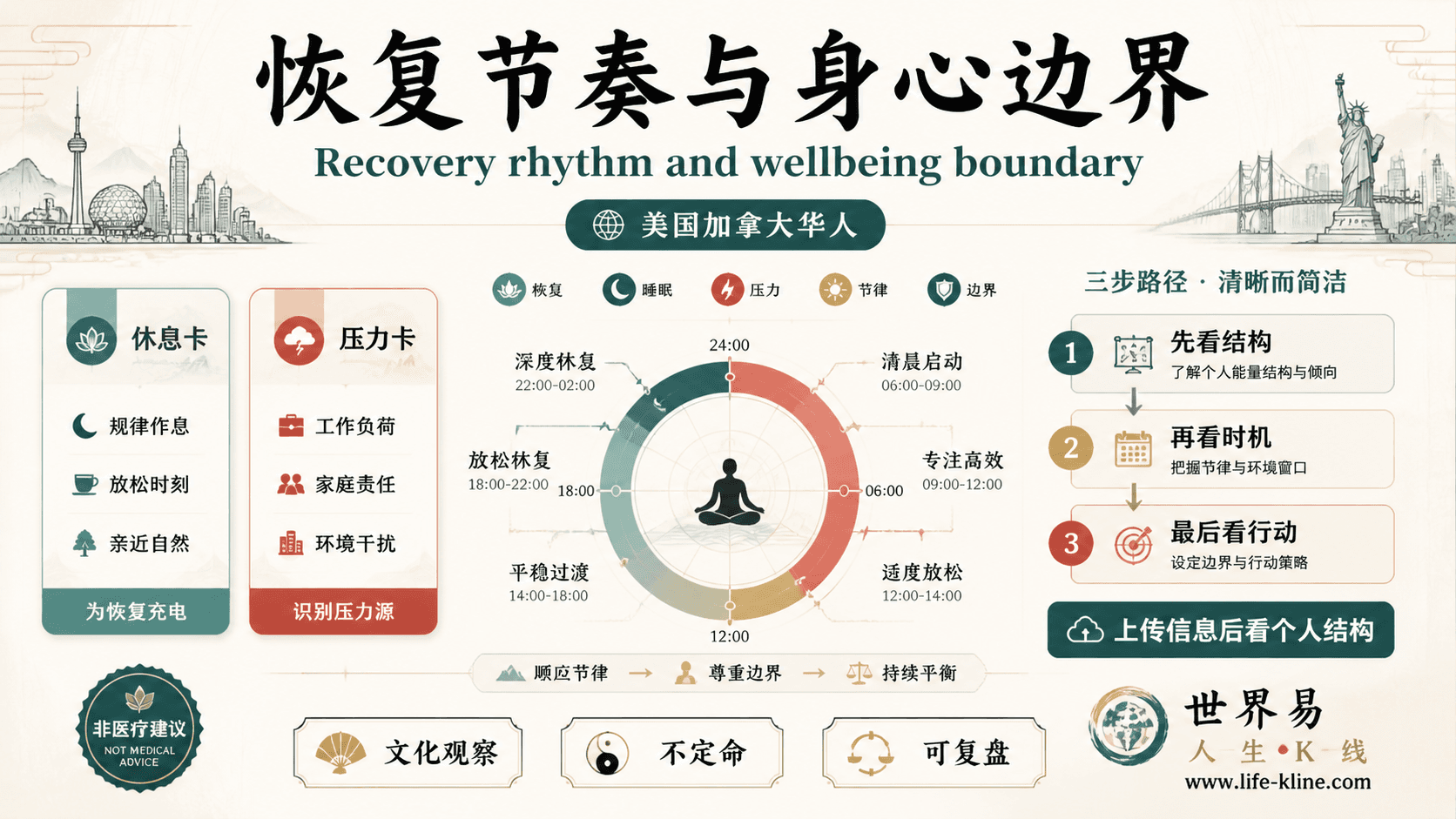
这张图把《Boundaries of Economic and Emotional Support Amid Academic Anxiety: A Parent-Child Metaphysics Perspective》里的命理概念转成关系、边界和应用场景,适合先看图建立结构,再回到知识文章正文理解细节。
八字第一份报告怎么看不应被写成固定结论。更适合美国加拿大华人的读法,是把传统术语翻译成结构、时机、环境、行动和复盘。
查看图片解读