Family Decision-Making Under Multiple Role Pressures of an Only Child: Persisting with the Plan or Resetting Goals
把这篇文章落到自己身上验证:先看结构,再进入个人分析,不做泛泛阅读。
Why This Decision Is Particularly Difficult in This Scenario
Only children often carry multiple roles within the family, including supporting parents, inheriting family responsibilities, and serving as emotional anchors. This concentration of roles significantly increases their pressure when facing major family decisions. Parents’ expectations and reliance on the only child easily lead to emotional entanglement and over-attention, making the child's self-worth closely tied to parental expectations and hindering the formation of an independent self-awareness.
In parenting dynamics, the attachment relationship of only children often exhibits the characteristic of an "emotional only seed," meaning the lack of emotional sharing among siblings amplifies emotions. When encountering obstacles in family decisions, the child's emotional fluctuations and family conflicts tend to escalate. If parents cannot sensitively perceive and flexibly adjust their expectations, the dilemma between persistence and adjustment in decision-making becomes a major challenge.
BaZi structural analysis plays an auxiliary role in judgment at this time. The strength of the Day Master, the combination of the Ten Gods (Shi Shen), and the configuration of Yong Shen (favorable element) and Ji Shen (unfavorable element) reflect the child's personality tendencies, stress coping abilities, and family relationship dynamics. For example, Yin (印 star) represents attachment and support; Bi Jian (比肩) symbolizes competition and autonomy; Zheng Guan / Qi Sha (官杀) reflect authority pressure; Shi Shen / Shang Guan (食伤) relate to creativity and expression; Cai (财 star) influences resources and achievements. These combinations can indicate when parents should provide supportive persistence or guide flexibility.
Therefore, the difficulty in family decision-making for only children lies not only in the multiple real pressures but also in how to scientifically judge the timing to persist with the original plan or reset goals by integrating BaZi structure, thereby reducing parent-child friction and promoting the child's psychological health.
Three Core Dimensions of BaZi Judgment
The strength of the Day Master and the type of chart pattern form the foundation of BaZi judgment. A relatively strong Day Master often indicates a strong self-awareness and some resilience under pressure but may be stubborn and hard to change. A relatively weak Day Master tends to rely more on external support, easily feeling anxious when facing difficulties and requiring external assistance to stabilize emotions. Patterns like Jie Cai (劫财) often indicate strong Bi Jian energy, symbolizing self-competition and resource contention; Qi Sha (七杀) patterns reflect pressure and challenges; Shi Shen (食神) patterns express creativity and emotional flow.
Yin star represents attachment and spiritual support, symbolizing the emotional connection between child and parents. When Yin is strong, the child is more likely to depend on parents, and parental over-attention may exacerbate dependence. When Yin is weak or drained, the child tends to be more autonomous but may feel emotionally isolated. Bi Jian represents peer competition and self-development; when strong, the child is more independent, and parents need to appropriately loosen control. Zheng Guan / Qi Sha represent authority pressure; the intensity of parental discipline often correlates with these stars. Excessive strength may increase the child's psychological burden.
The interaction between Da Yun (decade luck cycle) and Liu Nian (annual fortune) reveals the current environmental influence on the chart. Stable Da Yun suggests maintaining the status quo; when encountering obstacles, cautious observation is advised to avoid blind advancement. Favorable Da Yun allows for following the momentum and persisting with the original plan. For example, a Liu Nian with strong Bing Wu (丙午) fire is favorable if the Yong Shen is fire, making the timing better; otherwise, caution is needed. The combination of Da Yun and Liu Nian serves as a rhythmic reference for decision-making, helping parents grasp the pace of persistence versus adjustment.
Three Real BaZi Case Studies
Case 1: This male chart has a relatively strong Day Master Gui Shui (癸水), with a Jie Cai (劫财) pattern. The Yong Shen are Earth and Fire; the Ji Shen is Metal. Currently in the Wu Shen (戊申) Da Yun (ages 54-63), a stable luck cycle suitable for maintaining status quo. The Liu Nian is Bing Wu (丙午), with strong fire supporting adaptability. The Jie Cai pattern with a relatively strong Day Master indicates the child has a strong personality, competitive awareness, and some stress resilience. The Earth and Fire Yong Shen suggest the need for stability and warmth in support. This chart shows the child possesses internal strength to persist under multiple role pressures, but the Metal Ji Shen warns to be cautious when faced with external weakening forces.
In family decisions, when the child encounters obstacles, parents should pay attention to the stubbornness and competitive mindset brought by the strong Jie Cai pattern Day Master. If the environment and Da Yun/Liu Nian are stable, it is recommended to maintain the original plan, giving the child necessary autonomy and emotional support. However, if Metal-related disruptions or changes occur, parents should be alert to adjust strategies to avoid excessive persistence causing tension. The judgment order should first assess the external environmental impact, combined with professional psychological consultation, to evaluate the child's emotional and adaptive state before deciding whether to continue.
Case 2: This male chart has a relatively weak Day Master Jia Mu (甲木), with a Qi Sha (七杀) pattern. The Yong Shen is Fire; the Ji Shen is Earth. Currently in the Bing Wu (丙午) Da Yun (ages 38-47), a very auspicious luck cycle; the Liu Nian is also Bing Wu, indicating smooth fortune. The Qi Sha pattern with a weak Day Master means the child bears considerable pressure and has weaker self-defense ability. The Fire Yong Shen strengthens internal drive and action; the Earth Ji Shen indicates potential obstacles.
In the scenario of multiple pressures on an only child, this chart suggests the child may feel anxious due to parental expectations and authority pressure (Qi Sha). However, the auspicious Da Yun and fire-strong Liu Nian enhance the child's ability to persist and break through. Parents should follow the momentum, provide encouragement and moderate autonomy, supporting the child to persist with the original plan. At the same time, attention should be paid to the potential obstacles brought by Earth Ji Shen. If resistance is too great, flexible adjustments are necessary. The judgment order recommends first assessing the child's mental state and stress tolerance, combined with family therapy, to detect signs of excessive anxiety before deciding persistence or flexibility.
Case 3: This female chart has a balanced Day Master Ding Huo (丁火), with a Shi Shen (食神) pattern. The Yong Shen is Wood; the Ji Shen is Water. Currently in the Ren Xu (壬戌) Da Yun (ages 24-33), a stable luck cycle; the Liu Nian is Bing Wu (丙午), with strong fire supporting adaptability. The Shi Shen pattern symbolizes creativity and emotional expression; the balanced Day Master indicates a relatively balanced personality. The Wood Yong Shen supports growth and creativity; the Water Ji Shen warns of emotional fluctuations needing control.
This chart shows the child expresses emotions smoothly under the pressures of being an only child. However, due to the relationship between Wood Yong Shen and Water Ji Shen, parental over-attention (emotional Water) may cause the child to feel resistant or emotionally lose control. When facing obstacles in family decisions, the stable Da Yun suggests maintaining the status quo, but the fire-strong Liu Nian helps adaptability. Parents should monitor the child's emotional signals and adjust the level of attention appropriately, avoiding blind persistence. The judgment order suggests first observing whether the child shows signs of emotional suppression or rebellion, combined with psychological counseling intervention, to flexibly adjust family goals.
Common Misjudgments and Blind Spots in This Scenario
In family decisions involving only children, parents often fall into binary thinking of "must persist" or "must compromise," neglecting the dynamic changes of BaZi rhythms and the child's psychological state. Often, parents believe persistence is responsible for the child's future, but this actually increases the child's psychological burden and parent-child conflicts.
Another blind spot is over-focusing on a single dimension such as Yin star (印) or Zheng Guan / Qi Sha (官杀), ignoring the supportive roles of Bi Jian (比肩) and Shi Shen (食伤) for the child's autonomy and emotional expression. For example, strong Yin does not necessarily mean continuous dependence; strong Zheng Guan / Qi Sha is not absolute suppression. A comprehensive judgment combining Da Yun and Liu Nian is required.
Additionally, parents often overlook the influence of Da Yun and Liu Nian rhythms, hastily adjusting or stubbornly holding on when facing obstacles, lacking patience for observation and waiting for the interaction between Da Yun and Liu Nian, which easily leads to decision errors.
Finally, misusing BaZi to provide deterministic conclusions neglects the complexity of adolescent and youth psychology and ignores the necessity of professional psychological counseling and family therapy, potentially misleading the family in an unfavorable direction.
Practical Judgment Sequence
First, parents need to combine the child's BaZi chart pattern, assess the Day Master strength and Yong Shen / Ji Shen, and understand the child's intrinsic psychological motivation and stress coping ability. The combination of Ten Gods such as Yin star, Bi Jian, Zheng Guan / Qi Sha, Shi Shen, and Cai star serve as auxiliary references to judge the child's current attachment level, autonomy, and endurance.
Second, combine the current Da Yun and Liu Nian interaction to evaluate external environmental support or obstruction. Stable Da Yun suggests maintaining status quo, suitable for observation and gradual adjustment; favorable Da Yun allows following momentum; if Liu Nian aligns with Yong Shen, timing is good; otherwise, act cautiously.
Third, focus on the child's psychological health signals, especially emotional reactions, attachment status, and autonomy needs when encountering obstacles. Parents should cooperate with professional psychological counseling and family therapy, avoiding making drastic decisions based solely on BaZi. According to the child's feedback, flexibly adjust whether to continue advancing the original plan or reset goals.
In summary, decision-making should use BaZi as a rhythmic aid, combined with real parenting dynamics and professional guidance, following the sequence of "first screening emotional and environmental signals — then judging BaZi rhythm — finally taking gradual action or adjustment," avoiding impatience and blind decisions, with the core aim of supporting the child's healthy growth.
FAQ
Question 1: For a child with a relatively strong Day Master, how should parents judge whether to persist or adjust family decisions? Answer: Children with a relatively strong Day Master usually have strong autonomy and stress resilience. Parents should provide appropriate space in decision-making and combine Da Yun and Liu Nian to judge environmental stability. If Da Yun is stable and the child's emotions are steady, persistence is generally advisable. If Ji Shen impacts or significant emotional fluctuations occur, adjusting strategies and seeking professional guidance is recommended.
Question 2: How should parents respond when a child with a Qi Sha pattern experiences high family pressure? Answer: Children with a Qi Sha pattern often endure authority pressure and tend to feel anxious if the Day Master is weak. Parents should monitor the child's mental state, avoid excessive pressure, and utilize the auspicious Da Yun momentum to support persistence. At the same time, monitor the obstacles brought by Ji Shen and adjust goals and methods timely, synchronizing with psychological counseling.
Question 3: Can BaZi replace professional psychological counseling or family therapy? Answer: BaZi is only a rhythmic auxiliary tool helping parents scientifically judge the interaction trends between the child's personality and family environment. For psychological health issues in minors or youths, especially self-harm, depression, or violent tendencies, professional psychological counseling and family therapy must be prioritized. BaZi cannot replace professional medical and psychological interventions.

八字第一份报告怎么看|美国加拿大华人
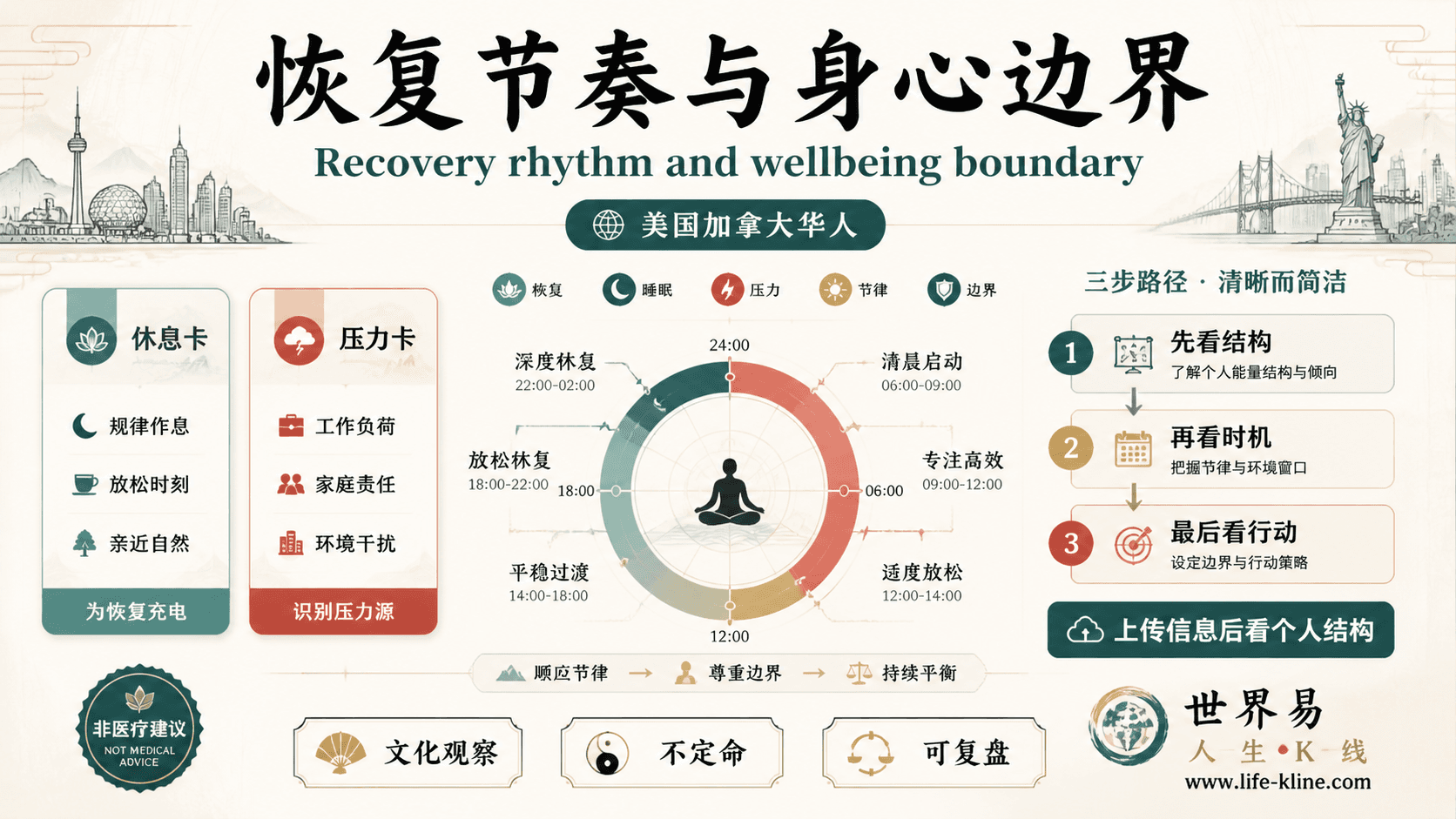
这张图把《Family Decision-Making Under Multiple Role Pressures of an Only Child: Persisting with the Plan or Resetting Goals》里的命理概念转成关系、边界和应用场景,适合先看图建立结构,再回到知识文章正文理解细节。
八字第一份报告怎么看不应被写成固定结论。更适合美国加拿大华人的读法,是把传统术语翻译成结构、时机、环境、行动和复盘。
查看图片解读