Mang Zhong: The Third Solar Term of Summer and the Boundary of BaZi Month Building
Mang Zhong is the third solar term of summer, with the Month Building in Wu (午). The Sun's ecliptic longitude reaches 75 degrees, marking the peak of Fire energy entering the Wu month. In BaZi chart casting, it serves as the true dividing point for switching month pillars and initiating Da Yun, based on solar terms rather than the lunar calendar's first day.
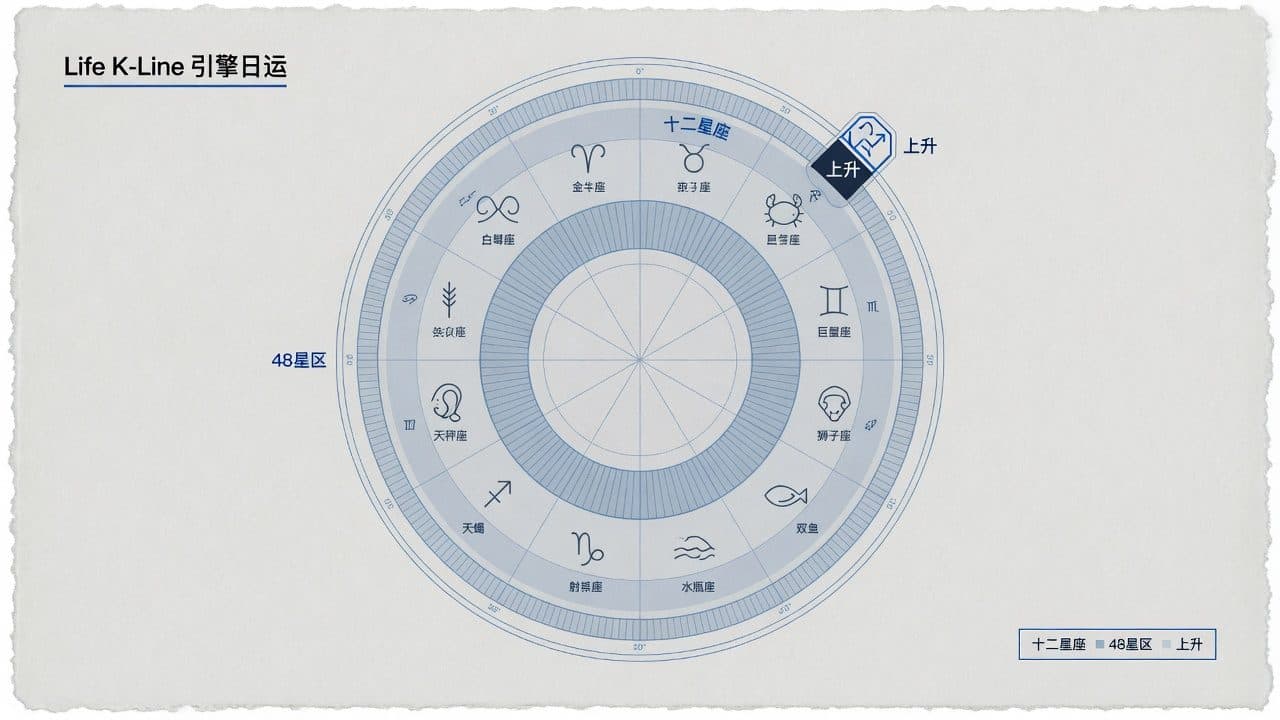
星座百科总览:把抽象判断拆成可看见的结构关系。
Concept Definition
Mang Zhong is the ninth solar term in the 24 Solar Terms system, located in the third stage of summer. In terms of time, Mang Zhong typically appears on June 5th, 6th, or 7th of the Gregorian calendar, with specific dates potentially floating by 1 to 2 days depending on the annual calendar arrangement. From an astronomical and geographical perspective, Mang Zhong is defined when the Sun's ecliptic longitude precisely runs to the 75-degree position, which is a key coordinate point for quantifying the Sun's trajectory.
In the traditional calendar system, Mang Zhong is not only the busy planting season for agricultural society but also a critical time node in metaphysical calculations. It marks the formal node of seasonal transition. For BaZi chart casting, Mang Zhong is the absolute standard for dividing month pillars. When casting a chart, a metaphysician must strictly determine the month pillar's belonging based on the exact moment of the solar term handover, rather than based on the starting date of the lunar month.
The core definition of Mang Zhong in the metaphysical system lies in its role as a hub for month building conversion. When the Sun runs to a specific ecliptic degree, it means the new month building is already established. For those studying metaphysics, accurately mastering this node of Mang Zhong is the foundation for correctly constructing the natal chart. Any judgment regarding the month pillar that departs from this time coordinate of Mang Zhong will lead to deviations in the Five Elements' generating and controlling relationships throughout the entire chart.
Traditional Metaphysical Significance
From the perspective of the evolution of Five Elements climate, the Mang Zhong season marks the state where Fire energy enters the peak of the Wu month. At this time, the Sun's energy reaches the extreme point of summer, with Wu Fire in command (当令), and Yang energy in the world is most vigorous. In metaphysical analysis, this characteristic of extremely strong Fire energy in the climate will be directly projected onto the natal chart of the subject, making the Day Master's Five Elements performance particularly obvious in the Wu month. If Fire energy is already strong in the natal chart, encountering Mang Zhong is like adding wings to a tiger, making the fire even stronger; if the Day Master is Water, they face immense pressure of control and leakage.
Mang Zhong has an irreplaceable structural significance in BaZi chart casting; it is the true dividing point for switching month pillars based on solar terms. This rule establishes the precision of time's influence on fate. When casting a chart, one must divide the month pillar based on the actual handover time of Mang Zhong in the Gregorian date, and cannot simply use the first day of the lunar month as the start of the month. If the lunar first day is mistakenly used, it will lead to errors in month pillar belonging, thereby changing the Five Elements distribution of the entire four pillars of the BaZi chart, causing subsequent judgments of good and bad fortune to completely lose their basis.
Furthermore, as a key reference point for Da Yun initiation, the time accuracy of Mang Zhong directly determines the age of Da Yun initiation and the judgment of fortune and misfortune in the steps. Ancient methods state that solar terms are the boundaries, and Da Yun also changes accordingly. The accurate handover time of Mang Zhong is the cornerstone for calculating the number of years for Da Yun initiation. If the month pillar division is incorrect due to date floating, it will not only affect the starting time of Da Yun but also change the forward or backward arrangement of Da Yun Heavenly Stems and Earthly Branches, causing a huge discrepancy between the subject's life fortune trend and reality, which is an unquestionable iron law in traditional metaphysics.
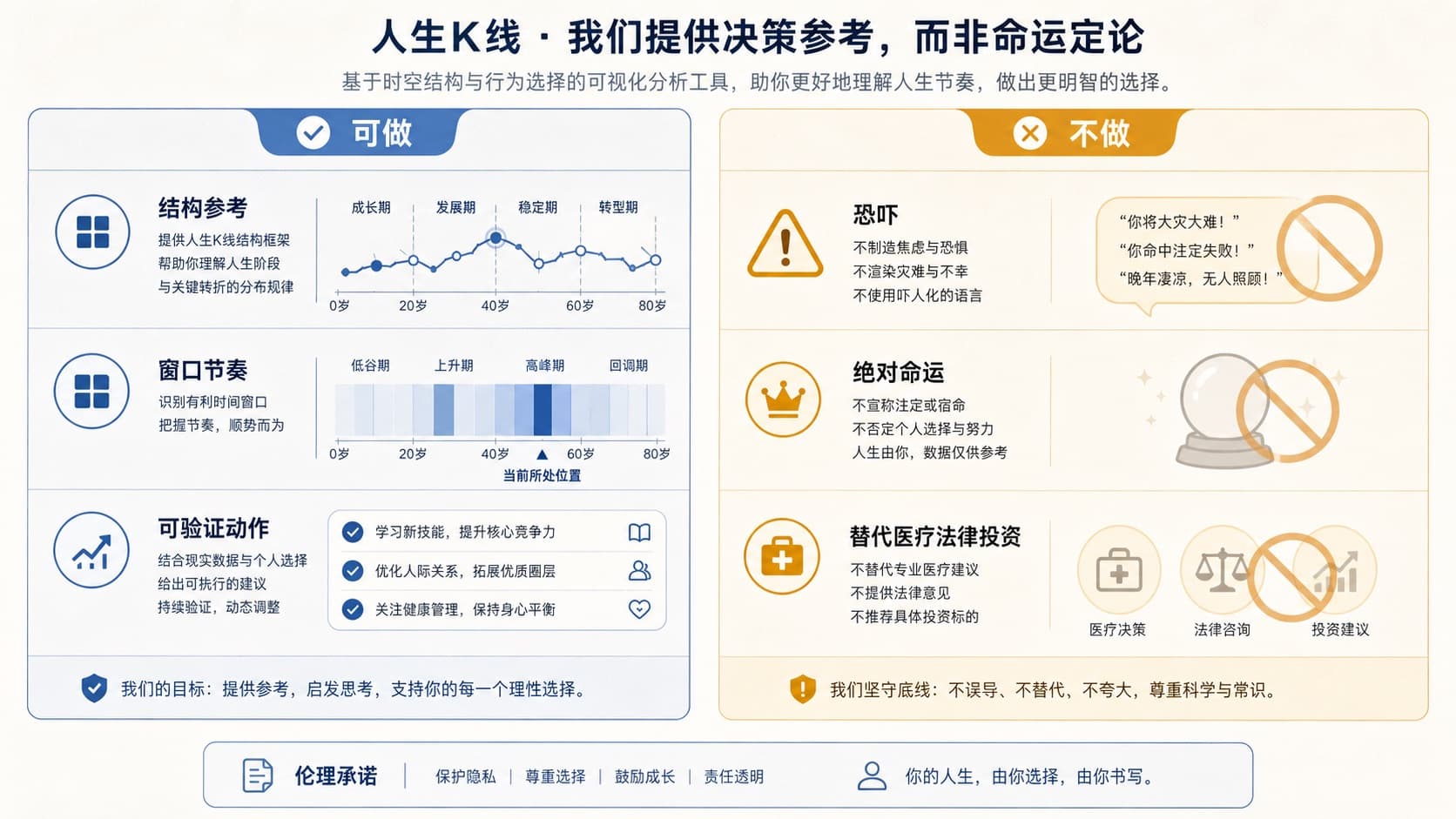
判断边界:参考不是定论:把抽象判断拆成可看见的结构关系。
Practical Configuration and Interpretation
In practical natal chart configuration, when encountering the node of Mang Zhong, the primary task is to calibrate the month pillar. Regardless of what the month building is, as long as it falls after the Mang Zhong solar term, the month pillar enters the new Earthly Branch domain. For example, even if the lunar calendar has not passed the first day, the month pillar has already updated when the Sun's ecliptic longitude just passes 75 degrees at the handover of Mang Zhong. The caster needs to be precise to the specific handover moment to determine the Five Elements of the month let to which the Day Stem belongs during this period. This precise spatio-temporal positioning is the prerequisite condition for conducting subsequent Five Elements preference and aversion analysis.
When Fire energy enters the peak of the Wu month, the water-fire relationship in the natal chart will become the focus of analysis. If the Day Master is Bing or Ding Fire, encountering the Wu month of Mang Zhong means they receive the command and are strong; one needs to see if the configuration of Wealth, Officer, Seal, and Food God is effective. If the Day Master is Ren or Gui Water, they are in the extreme place (绝地), needing to see if there are strong roots or Seal stars to generate and support them to resist the fire. In practice, one must also combine Da Yun and Liu Nian. If the Da Yun also encounters a place of strong Fire, the fire will become a prairie fire, needing to guard against career changes or health damage. If the Da Yun has Water or Wood as favorable elements, it can regulate the climate and cool down, forming a balance.
Mang Zhong has special significance in judging fortune turns because it is the key point where summer transitions from hot to extremely hot. At this time, latent Fu Yin or Fan Yin phenomena in the natal chart are easily triggered. For example, if there is a Si-Hai clash in the original chart, encountering the Wu month of Mang Zhong, Wu Fire generates Si Fire, which may intensify the force of the clash. Furthermore, as a dividing point of solar terms, Mang Zhong is also an auxiliary indicator for judging the good and bad fortune of the Liu Nian. If the Liu Nian Earthly Branch forms a special combination with the month building, it often predicts that the subject will experience major personal changes or environmental changes around this solar term, requiring early layout to respond to the timing of heaven and earth.
Common Misconceptions
The most common misconception is using the first day of the lunar month as the standard for switching month pillars. Many beginners, when casting BaZi, are accustomed to dividing months based on lunar dates, believing that the first day is the start of the new month, thereby determining the month pillar. This practice is particularly dangerous around the handover of solar terms like Mang Zhong. The fact list clearly states that in BaZi, the month pillar is based on the switch of solar terms, not the first day of the lunar month. If the lunar date is mistakenly used, it will lead to errors in the Earthly Branch of the month pillar, thereby causing the entire judgment of Five Elements strength and weakness to completely fail, which is a major taboo that must be avoided when entering the field of metaphysics.
Another misconception is ignoring the phenomenon of Gregorian date floating of Mang Zhong. As a solar term, the Gregorian date of Mang Zhong is not fixed; it may vary between the 5th, 6th, or 7th, with a floating amplitude of 1 to 2 days. If the caster mechanically applies a fixed Gregorian date while ignoring the specific handover moment of the year, it will also lead to errors in month pillar division. The correct approach is to precisely query the specific handover time point of Mang Zhong according to the annual Yellow Calendar or professional astronomical data, using this as the absolute boundary for dividing the month pillar. Any rough estimation is unacceptable.
FAQ
Question: What specific role does Mang Zhong play in BaZi chart casting? Answer: Mang Zhong plays a decisive dividing role in BaZi chart casting; it is the true dividing point for switching month pillars based on solar terms and also the key time benchmark for initiating Da Yun. When casting a chart, one must determine the month pillar based on the specific handover moment of Mang Zhong, not the first day of the lunar month, to ensure the accuracy of the Five Elements generating and controlling relationships.
Question: What impact does the Fire energy characteristic of the Mang Zhong season have on the natal chart? Answer: Mang Zhong is the third solar term of summer, with the Month Building in Wu (午), and the Sun's ecliptic longitude reaches 75 degrees, marking the peak of Fire energy entering the Wu month. At this time, Yang energy in the world is extremely vigorous. If the natal chart encounters strong Fire, it will strengthen the Fire attribute of the Day Master, and the preference or aversion needs to be determined based on the specific strength of the Day Master; if the Day Master is Water, they face immense pressure of control and leakage, needing strong roots or Seal stars to generate and support to resist the fire.
Question: Is the Gregorian date of Mang Zhong fixed? Answer: The Gregorian date of Mang Zhong is not fixed; it is usually on June 5th, 6th, or 7th, with specific dates floating by 1 to 2 days depending on the annual calendar arrangement. In BaZi chart casting, one must divide the month pillar based on the actual handover time of the year, not dead-set on a fixed date, otherwise it will lead to errors in month pillar belonging and affect the accuracy of the entire natal chart.
本文含 2 张图解(封面/结构/时位/行动或风险)。图解用于建立判断框架,不构成宿命结论; 个人决策请结合测算报告与工具验证。