Han Lu Solar Term Metaphysics Encyclopedia: Detailed Analysis of Metal Qi and Earthly Branch Xu
Han Lu is the fifth solar term of autumn, with Xu as the month pillar, the Sun at longitude 195 degrees, Metal entering the tomb, and Xu as the Fire storage. This solar term is the true dividing line for arranging the month pillar and starting the Da Yun, determined by solar term switching rather than the lunar calendar first day, holding decisive significance for BaZi charting.
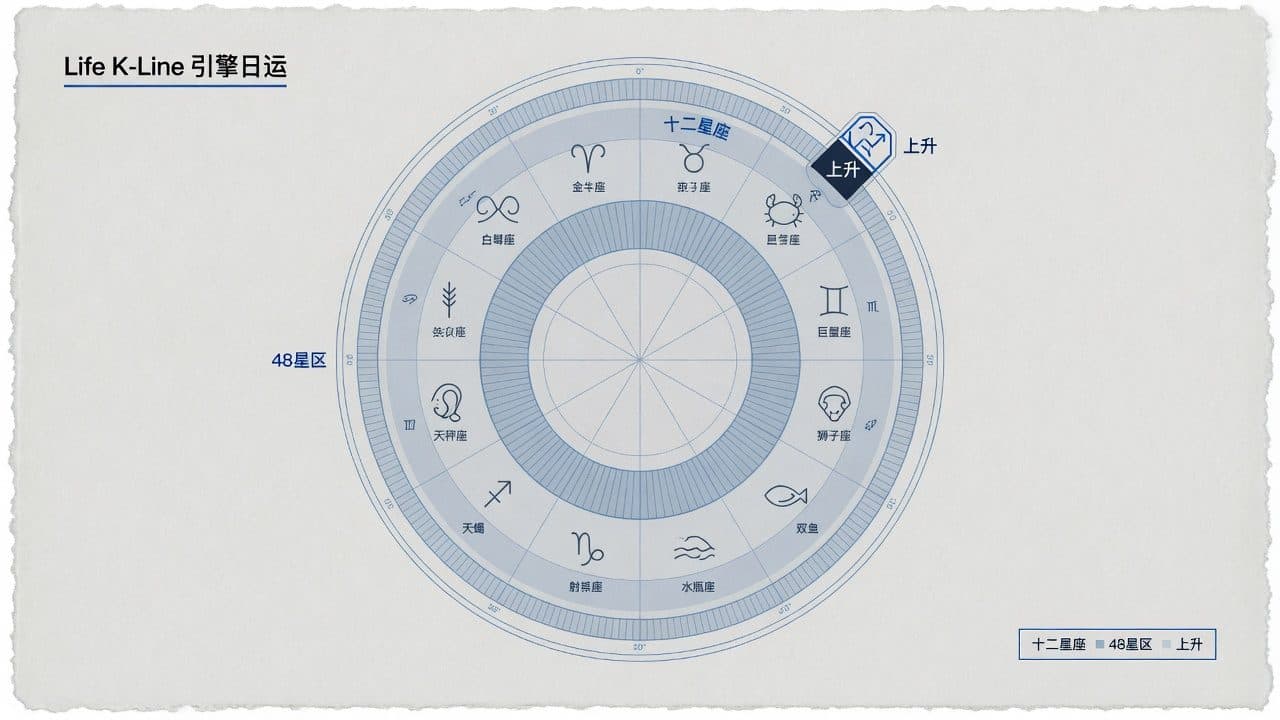
星座百科总览:把抽象判断拆成可看见的结构关系。
Concept Definition
Han Lu is the fifth solar term among the twenty-four solar terms, marking the formal beginning of the second autumn season. From a temporal dimension, Han Lu usually appears around the beginning of the tenth lunar month, specifically on October 8th or 9th of the Gregorian calendar, at which point the Sun runs to the position of 195 degrees of ecliptic longitude. This specific celestial trajectory determines the angle and intensity of solar heat received by the Earth, thereby triggering significant drops in natural temperature and changes in the condensation form of dew.
Within the metaphysical system, Han Lu is not merely a natural time marker but also a critical node for dividing months. It belongs to the precise equal division system of the twenty-four solar terms and is an important coordinate on the Sun's ecliptic. For BaZi metaphysicians, the energy field represented by Han Lu serves as the foundation for constructing an individual's life chart, defining the Heavenly Stems and Earthly Branches attributes of that year and month, directly determining the composition of the month pillar and the Five Elements power it contains.
Han Lu possesses a unique state description in the flow of Five Elements. At this time, Metal Qi is vigorous but approaching its return, entering a state of convergence and precipitation. This state in metaphysics is known as Metal Entering the Tomb, meaning the trajectory of Metal Qi undergoes a fundamental transformation, shifting from generation to storage. Simultaneously, the Earthly Branch of the month containing the solar term is designated as Xu, and Xu possesses a special storage function in its Five Elements attribute, constituting the Earthly Branch environment where Metal enters the tomb.
Traditional Metaphysical Significance
In traditional metaphysical classics, the Month Pillar (Yue Jian) is the cornerstone for establishing the month pillar. With Xu Earth as the Month Pillar, it means the dominant Earthly Branch of that month is Xu. Xu Earth plays a crucial role in the Heavenly Stems and Earthly Branches system. As the Fire Storage (Huo Ku), it can contain and transform Fire Qi. During the Han Lu season, this characteristic of the Fire Storage forms a subtle interactive relationship with the state of Metal entering the tomb. Metal entering the tomb in Xu indicates that the energy of Metal is sealed and transformed within the Xu Earth, no longer displaying wildly, but instead seeking stability inwardly.
As the true basis for determining the month pillar, Han Lu reflects the ancient people's profound understanding of the correspondence between celestial phenomena and human affairs. In BaZi charting, the determination of the month pillar directly relates to the judgment of the Ten Gods relationships and the starting point of the Da Yun. If one erroneously uses the first day of the lunar month as the standard instead of the solar term switching, it will lead to errors in the Earthly Branch and Heavenly Stem of the month pillar, subsequently causing deviations in the entire life chart pattern. Therefore, the timing point of this solar term possesses irreplaceable authority.
From seasonal phenology to metaphysical energy field, Han Lu embodies the energy transition from summer to autumn and from movement to stillness. Its ranking as the fifth of autumn demonstrates its role of connecting and bridging in the sequence of time. Metal Qi governs severity and transformation, while Metal entering the tomb implies the meaning of convergence and conclusion. This energy characteristic projected onto a person's fortune trajectory often corresponds to summaries in career, accumulation in finances, or convergence in interpersonal relationships. Xu Earth, as the Fire Storage, also suggests that the life master born in this month may possess internal accumulation and transformation capabilities.
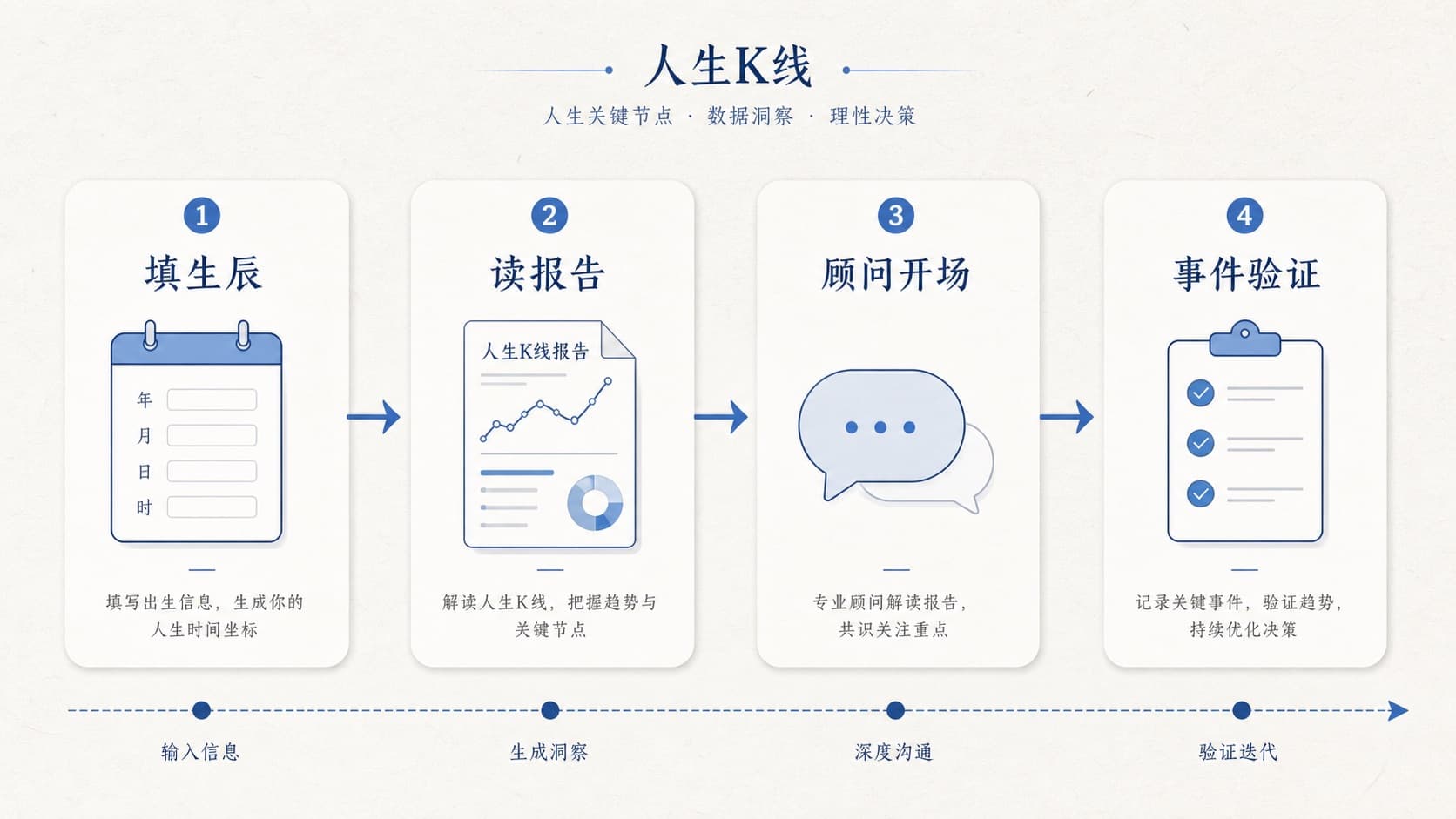
从生辰到可执行判断:把抽象判断拆成可看见的结构关系。
Practical Configuration and Interpretation
In practical BaZi charting, one must strictly follow the principle of determining the month pillar based on solar term switching. When the Sun's ecliptic longitude reaches 195 degrees, entering the Han Lu solar term, the Earthly Branch of the month pillar changes from the Earthly Branch of the previous month to Xu. This transformation serves as an important benchmark for calculating the auspiciousness and inauspiciousness of the Da Yun and Liu Nian. For example, if someone is born after the Han Lu solar term, their month pillar is Wu Xu or Ji Xu, rather than the Earthly Branch of the previous month. This precise positioning plays a decisive role in judging the strength of Five Elements and the selection of Yong Shen.
The combination of Metal entering the tomb and Xu being the Fire Storage has special interpretative basis in practice. When the natal chart shows vigorous Metal Qi encountering the Xu month, one must judge whether the Metal truly enters the tomb and whether the Fire hidden in Xu can transform the Metal Qi. If the original chart has abundant Metal, entering the tomb may lead to buried talent or reduced action force; if the original chart has abundant Fire, Xu as the Fire Storage can enhance the power of Fire, thereby controlling the overly vigorous Metal Qi. This relationship of generation, control, and transformation is the core logic for analyzing life charts in the Xu month of Han Lu.
The starting time of the Da Yun also depends on this Han Lu solar term node. The method of arranging the Da Yun is calculated based on the number of days between the birth date and the solar term. If the definition of the solar term is incorrect, the starting month and specific date of the Da Yun will also shift accordingly. In modern social applications, this rule is particularly important for accurately predicting key nodes in life and periods of fortune turning. Whether for job hunting, investment, or health regulation, one must deduce based on the correct month pillar and Da Yun time, avoiding multiple decision-making errors caused by misjudging the solar term.
Common Misconceptions
The most common misconception is taking the first day of the lunar month as the time point for switching the month pillar. Many beginners or non-professionals are accustomed to using lunar dates as the boundary, believing that the first day means changing the month, thereby ignoring the actual influence of the twenty-four solar terms. This erroneous concept directly leads to chaos in the Earthly Branch of the month pillar, making the entire BaZi chart built upon a wrong foundation. In metaphysical practice, one must clearly distinguish the temporal attributes of the lunar calendar and solar terms; the solar term is the true scale for measuring the conversion of Five Elements energy.
Another misconception is ignoring the specific meaning of Metal entering the tomb and Xu being the Fire Storage, merely treating Han Lu as an ordinary time node. Some people, after charting, lack in-depth understanding of why Metal Qi is special in the Han Lu month and why Xu Earth has special functions, leading to an inability to reasonably explain the changes in the strength of the life chart. In fact, Metal entering the tomb means the converging characteristic of Metal, and Xu being the Fire Storage means the gathering characteristic of Fire. These two coexist in the Han Lu month, constituting a unique Five Elements environment for that month, which cannot be simply overlooked.
Furthermore, the issue of floating Gregorian dates is often neglected. Although Han Lu usually occurs on October 8th or 9th, the specific date will fluctuate by 1-2 days depending on the precise moment the Sun's ecliptic longitude reaches 195 degrees. This minute time difference is crucial in metaphysics; life masters born across the solar term dividing line have completely different month pillar affiliations. Therefore, when charting, one must consult the precise solar term timetable rather than roughly estimate based solely on the Gregorian date to ensure the accuracy of interpretation.
FAQ
Question: Is the Han Lu solar term exactly equivalent to the ninth lunar month? Answer: Not necessarily. Han Lu is the solar term when the Sun's ecliptic longitude is at 195 degrees, usually occurring on October 8th or 9th of the Gregorian calendar, while the ninth lunar month may span before and after Han Lu, or even include白露 (White Dew) or 立冬 (Start of Winter). The month pillar in BaZi must be determined based on the solar term, not simply corresponding to the lunar month.
Question: What is the specific impact of Metal entering the tomb in the Han Lu month on the life master? Answer: Metal entering the tomb means the convergence of Metal Qi. The life master may exhibit a steady and introverted personality, with relatively reduced action force, making them suitable for careers in planning, warehousing, or work requiring accumulation. However, if the birth chart likes Metal, the Metal Qi entering the storage at this time can actually be beneficial for accumulating resources and wealth.
Question: How to determine the precise moment of Han Lu? Answer: The moment of Han Lu is determined by the precise moment when the Sun's ecliptic longitude runs to 195 degrees, usually occurring at a specific time point on October 8th or 9th of the Gregorian calendar. When charting, one must be precise to the minute and second, judging whether the birth time is before or after the solar term to decide the affiliation of the month pillar.
Question: What is the special significance of Xu being the Fire Storage in the Han Lu month? Answer: Xu Earth in the Han Lu month possesses the dual attributes of Fire Storage and Metal Tomb. The Fire Storage can generate Earth and transform Metal Qi, meaning the Five Elements flow in this month is complex and requires analysis of the generation and control relationship among Fire, Earth, and Metal in the specific BaZi, which cannot be generalized.
本文含 2 张图解(封面/结构/时位/行动或风险)。图解用于建立判断框架,不构成宿命结论; 个人决策请结合测算报告与工具验证。