The Rhythms of Destiny and Five Elements Regulation Guidance in Long-Term Preconception Health Maintenance Strategies
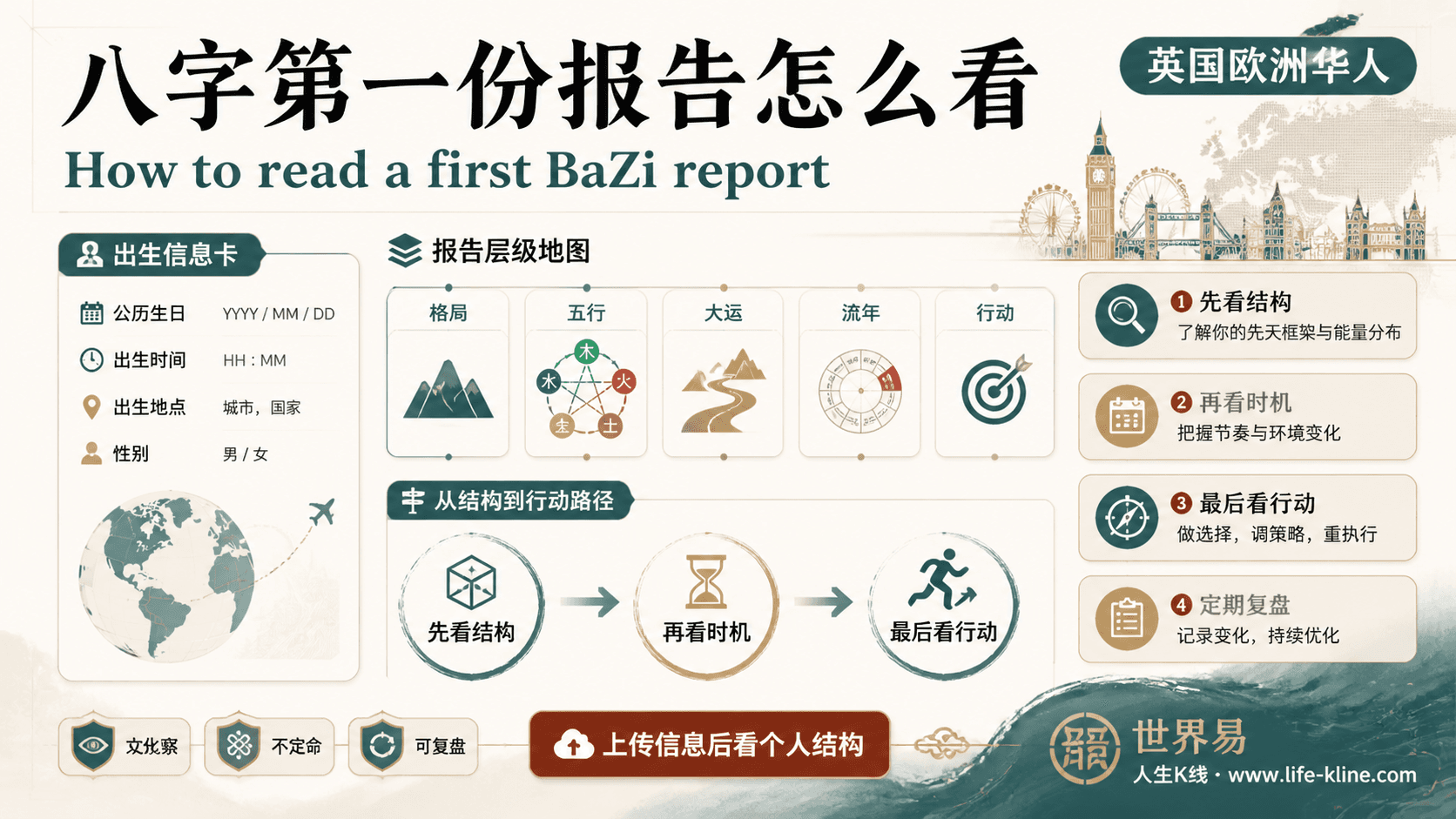
把这篇文章落到自己身上验证:先看结构,再进入个人分析,不做泛泛阅读。
Why This Decision Is Especially Difficult in This Health Scenario
The core difficulty in long-term preconception health maintenance strategies lies in the complex interaction between physiological rhythms and destiny Five Elements. The preconception period not only requires precise control of the conception window but also needs to consider regulation cycles and the prevention of pregnancy risks. All these demand a dynamic balance between lifestyle rhythms and the internal Five Elements visceral functions.
In reality, preconception individuals often exhibit symptoms such as cyclical fatigue, endocrine fluctuations, and emotional anxiety, which may be directly related to the excess or deficiency of certain Five Elements. For example, those with Wood (Mu) excess tend to experience liver Qi stagnation, manifesting as mental tension and insomnia; those with Metal (Jin) deficiency may have compromised respiratory or urinary system functions, affecting conception quality.
At the same time, the fast pace of modern life and environmental pressures often conflict with the Yong Shen requirements indicated by destiny, making sustained regulation difficult and maintenance effects unstable. Especially during the transitions of Da Yun and Liu Nian, fluctuations in physiological and psychological states further increase decision-making challenges.
Therefore, in long-term preconception health maintenance, it is necessary to accurately grasp the regulation focus based on the Five Elements visceral characteristics revealed by destiny, while also considering the coordination with real-life rhythms. Only then can conception and pregnancy safety be effectively supported, avoiding blind following or neglecting individual differences.
Correspondence Between Destiny and Five Elements Visceral Organs
The strength or weakness of the Day Master in destiny directly corresponds to the prosperity or decline of the Five Elements, thereby affecting the functional state of the corresponding visceral organs. A Day Master of Xin Jin (辛, Metal) tending to be strong represents a strong Lung Metal force; the Lung is a key organ for respiration and Qi and blood distribution. When Earth is the Yong Shen, Earth generates Metal, which benefits the smooth Qi mechanism of the Lung. For fertility, sufficient Qi and blood in the Lung and stable Lung function are crucial.
If the Day Master is weak and the Yong Shen is Fire, Fire overcomes Metal; when Fire is strong, it can assist Yang Qi development, benefiting the reproductive system's vitality. However, if Water and Wood are Ji Shen, attention must be paid to regulating Kidney Water and Liver Wood, as the Kidney stores essence and the Liver governs Qi flow, both significantly influencing reproductive functions.
A Day Master of Gui Shui (癸, Water) tending to be strong indicates abundant Water Qi. Water governs the Kidney, which is the root of congenital constitution and the foundation of reproductive health. Metal as both Yong Shen and Ji Shen shows that the chart is highly sensitive to Metal regulation. Metal governs the Lung; the Lung and Kidney mutually generate and restrain each other. Balancing Metal and Water visceral functions is key to long-term maintenance.
The interaction between Da Yun and Liu Nian determines the stability and changes of fortune. Stable luck cycles are suitable for maintaining existing conditions and stable maintenance strategies; Liu Nian’s variability reminds one to pay attention to dynamic changes in environment and constitution, reasonably adjusting lifestyle rhythms to avoid physical burdens caused by Five Elements imbalance.
Three Real BaZi Chart Cases
Case 1: A male aged 30-35, with a Day Master of Xin Jin (辛, Metal) tending to be strong, pattern is a pure strong pattern, Yong Shen is Earth, Ji Shen is Wood. Currently in the 2nd year of Ren Shen (壬申) Da Yun, with Liu Nian being Bing Wu (丙午). The strong Xin Jin indicates robust Lung function; Earth as Yong Shen benefits the Spleen Earth’s transportation and transformation, which plays an important role in nutrient absorption and Qi and blood production. The presence of Ji Shen Wood suggests the need to soothe Liver Qi; the Liver governs Qi flow and emotional regulation. The long-term maintenance strategy should focus on regulating Liver and Spleen, avoiding Liver Qi stagnation that affects Spleen Earth’s transformation. Reasonable scheduling of rest promotes visceral coordination. The judgment sequence recommends first observing Liver Qi flow, combined with Spleen and Stomach care. When insomnia or emotional fluctuations are obvious, lifestyle rhythms should be promptly adjusted, and professional Traditional Chinese Medicine assistance sought if necessary.
Case 2: A male aged 40-45, with a Day Master of Xin Jin (辛, Metal) tending to be weak, pattern is a Pian Cai (偏财) pattern, Yong Shen is Fire, Ji Shen are Water and Wood. Currently in the 7th year of Ji Hai (己亥) Da Yun, with Liu Nian being Bing Wu (丙午). The weak Xin Jin requires Fire to assist Yang Qi; Fire as Yong Shen helps enhance reproductive system vitality and promotes Qi and blood circulation. Ji Shen Water and Wood relate to Kidney Water and Liver Wood; the Kidney stores essence as the foundation of fertility, and the Liver regulates Qi flow. Long-term maintenance should focus on strengthening Kidney Yang transformation, preventing excessive Kidney Water from consuming Yang Qi, while soothing the Liver to avoid Liver Qi stagnation. The maintenance strategy should combine warming Kidney Yang and relieving Liver Qi stagnation, with reasonable adjustment of rest and diet to prevent overexertion. The judgment sequence suggests first assessing Kidney Yang status, monitoring emotional and psychological states to ensure smooth Qi flow. If obvious symptoms like soreness in the waist and knees or depression appear, the regulation plan should be promptly adjusted and medical consultation sought.
Case 3: A female aged 30-35, with a Day Master of Gui Shui (癸, Water) tending to be strong, pattern is Bi Jian (比肩), Yong Shen is Metal, Ji Shen is also Metal. Currently in the 6th year of Bing Xu (丙戌) Da Yun, with Liu Nian being Bing Wu (丙午). The strong Gui Shui indicates abundant Water, which tends to consume Metal; Metal is both Yong Shen and Ji Shen, showing a highly sensitive Metal-Water relationship. Lung and Kidney functions need balancing. The Lung governs Qi and the Kidney stores essence; both are vital for preconception. Long-term maintenance should focus on the mutual generation of Lung and Kidney, preventing Metal Qi damage that leads to Qi and blood deficiency. The maintenance process requires cautious balancing of Metal’s role, avoiding excessive Metal supplementation that causes adverse effects. The judgment sequence recommends first evaluating Lung and Kidney function manifestations, such as respiratory or urinary abnormalities, combined with emotional and lifestyle rhythm adjustments. Special attention should be paid to avoiding fatigue and environmental pollution, seeking professional guidance if necessary.
All three cases reflect the characteristic of stable Da Yun and Liu Nian favoring maintenance, emphasizing a long-term stable maintenance rhythm. Meanwhile, the variability of Liu Nian reminds that during preconception, flexible adjustments are needed, paying attention to subtle bodily changes and combining destiny Five Elements analysis to scientifically formulate regulation plans.
Common Misjudgments and Blind Spots in This Scenario
In the application of destiny in preconception health, common misjudgments include overreliance on destiny judgment while neglecting medical diagnosis and scientific maintenance. Destiny can only assist in grasping individual Five Elements visceral excess or deficiency and rhythm characteristics; it cannot replace modern medicine’s examination and treatment of reproductive organ functions, hormone levels, and potential diseases.
Another blind spot is ignoring the dynamic changes of Yong Shen and Ji Shen in destiny, blindly pursuing the strengthening of a certain Five Element, which leads to visceral function imbalance and adversely affects health. Long-term maintenance strategies need to be flexibly adjusted according to personal symptoms and environmental factors.
Additionally, some people use destiny as the sole basis for formulating regulation plans, neglecting the impact of lifestyle rhythms and environmental changes, resulting in unsustainable maintenance and missing the optimal conception window.
It should be especially emphasized that when obvious abnormal symptoms occur, such as severe insomnia, persistent pain, serious anxiety, or abnormal postoperative recovery, immediate medical attention is required. Destiny serves only as a rhythm reference and must never replace clinical diagnosis and treatment.
Practical Judgment Sequence
First, identify the Day Master strength and Yong Shen and Ji Shen based on the destiny structure, preliminarily judging the excess or deficiency of Five Elements visceral organs, and confirm current maintenance focus and potential risks by combining Da Yun and Liu Nian.
Second, correlate the preconception individual’s real physical symptoms (such as fatigue, sleep quality, emotional state, endocrine performance, etc.) with Five Elements visceral functions to judge whether obvious imbalance or hidden risks exist, adjusting lifestyle rhythms and dietary habits to assist balance.
Finally, if severe discomfort or suspected red-flag signals appear (such as intense pain or persistent abnormal emotions), immediate medical consultation is necessary. Destiny judgment serves as a long-term rhythm reference and should not delay clinical diagnosis. Maintenance strategies should be dynamically adjusted according to destiny and actual conditions to ensure both physical and psychological health during preconception.
FAQ
Question 1: How do Yong Shen and Ji Shen in destiny affect preconception health? Answer: Yong Shen represents the Five Elements and visceral organs that need strengthening or support in destiny, helping balance internal functions and optimize the conception environment; Ji Shen represents the Five Elements that need suppression or avoidance to prevent visceral dysfunction. Correct identification of Yong Shen and Ji Shen aids in formulating scientific maintenance strategies.
Question 2: How to avoid misjudgments caused by destiny judgment in long-term maintenance? Answer: Destiny should be used as an auxiliary reference combined with medical examinations and actual physical conditions, avoiding blindly pursuing the strengthening of a certain Five Element, paying attention to reasonable arrangement of lifestyle rhythms, and seeking medical attention promptly when abnormal symptoms occur.
Question 3: What specific guidance do Da Yun and Liu Nian provide for preconception? Answer: Da Yun and Liu Nian reflect the changing trends of destiny fortune. Stable Da Yun favors maintaining the status quo and stable maintenance; Liu Nian variations remind the need to flexibly adjust lifestyle rhythms and maintenance plans to timely respond to bodily state fluctuations.

八字第一份报告怎么看|美国加拿大华人
这张图把《The Rhythms of Destiny and Five Elements Regulation Guidance in Long-Term Preconception Health Maintenance Strategies》里的命理概念转成关系、边界和应用场景,适合先看图建立结构,再回到知识文章正文理解细节。
八字第一份报告怎么看不应被写成固定结论。更适合美国加拿大华人的读法,是把传统术语翻译成结构、时机、环境、行动和复盘。
查看图片解读