To Endure or Recuperate Under Emotional Stress? Health Decision Analysis Based on BaZi Five Elements
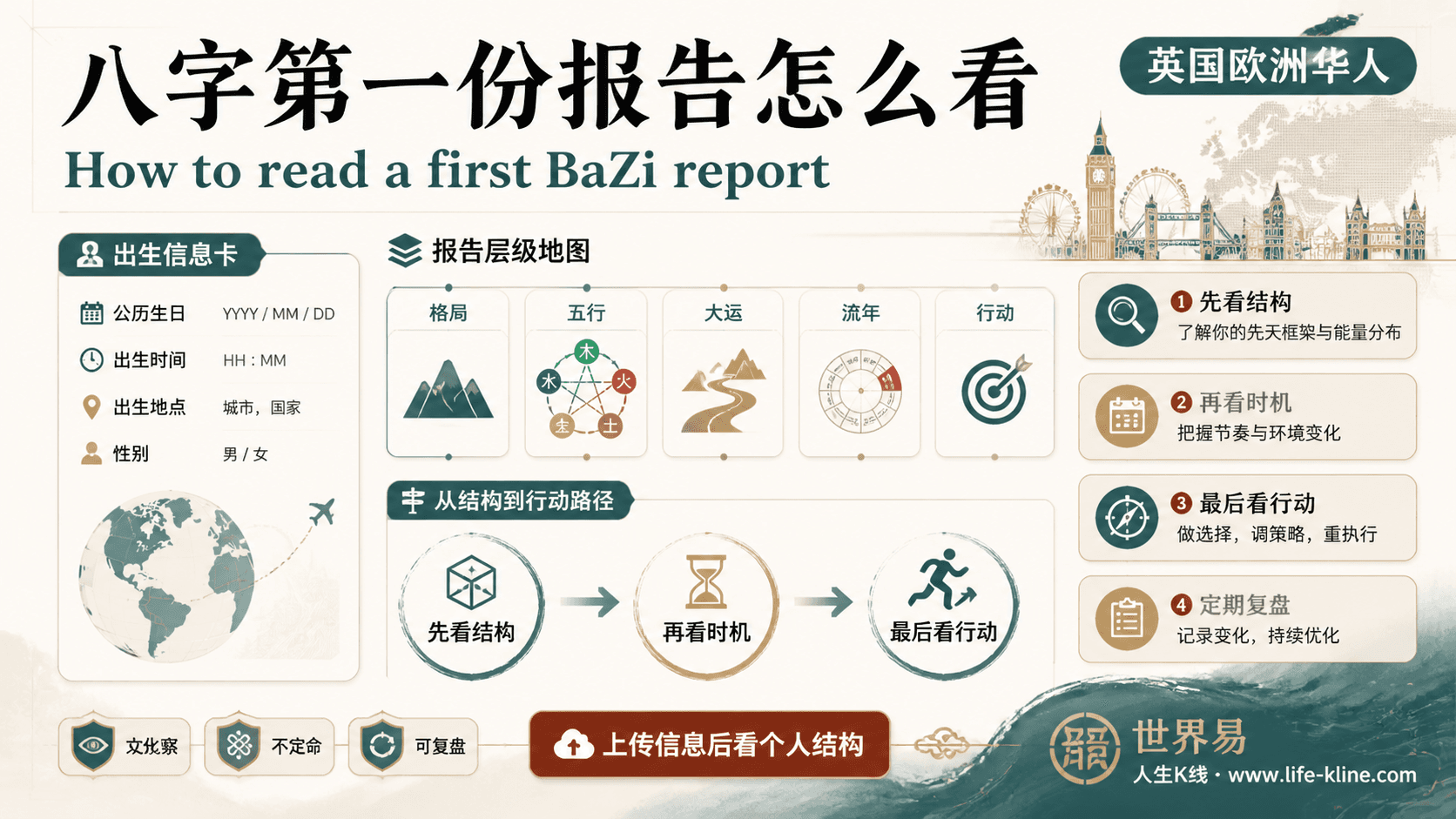
把这篇文章落到自己身上验证:先看结构,再进入个人分析,不做泛泛阅读。
Why This Decision Is Especially Difficult in This Health Scenario
In emotional and psychological stress scenarios, depression tendencies, anxiety, panic, internal conflict, and somatization symptoms intertwine, often making it difficult for individuals to accurately judge their endurance limits. Symptoms such as fatigue, insomnia, chest tightness, and gastrointestinal discomfort reflect both psychological burdens and possible visceral dysfunction. This mind-body entanglement makes the choice between continuing to endure or pausing to recuperate a major challenge.
Modern life’s fast pace and high work pressure lead many to habitually 'grit their teeth and persist,' but long-term endurance easily causes Five Elements imbalance and increased burden on internal organs, especially the liver, spleen, and kidneys, which are closely related to emotional regulation. Without timely adjustment, symptoms may worsen and even trigger serious psychosomatic diseases.
From a BaZi perspective, the strength of the Day Master, exclusive or Qi Sha (Seven Killings) patterns, and the Five Elements flow of Yong Shen and Ji Shen reflect the interaction between internal energy and external pressure. The clash and harmony relationships of Five Elements in Da Yun and Liu Nian reveal current psychological and physical support levels and potential risks, providing dynamic references for deciding whether to 'endure' or 'pause to recuperate.'
Therefore, the core difficulty in this decision lies in scientifically identifying signals for 'immediate stress reduction' and timing for 'still able to endure' by integrating real physical and psychological symptoms with dynamic BaZi Five Elements changes, avoiding blind endurance that worsens health or excessive panic that disrupts normal life rhythms.
BaZi and Five Elements Correspondence to Internal Organs
The strength of the Day Master’s Five Elements reflects an individual’s vitality and core energy. An overly strong Day Master usually indicates an excess of the corresponding Five Elements internally, which may overload related organs (e.g., Wood corresponds to Liver and Gallbladder, Fire to Heart and Small Intestine, Earth to Spleen and Stomach, Metal to Lung and Large Intestine, Water to Kidney and Bladder), manifesting as irritability, anxiety, indigestion, or fatigue.
Exclusive strength patterns or Qi Sha (Seven Killings) patterns indicate certain Five Elements are extremely strong within the BaZi structure, potentially causing organ dysfunction. The Yong Shen (favorable element) is key to harmonizing the Five Elements and relieving stress; if the Yong Shen is weakened or clashed by Da Yun or Liu Nian, it signals reduced stress resistance and a higher risk of emotional breakdown or somatization.
The interaction between current Da Yun and Liu Nian Five Elements determines the energy flow in a specific period. For example, a stable Da Yun combined with a harmonious Liu Nian facilitates smoother emotional and physical regulation; significant clashes between Da Yun and Liu Nian Five Elements warn of sudden pressure increases, requiring vigilance for emotional loss of control and worsening physical symptoms.
Considering the Five Elements-organ correspondences: the Liver (Wood) governs smooth flow and emotional regulation; excessive Liver Wood leads to emotional agitation or depression. The Spleen (Earth) governs transformation and transportation; weak Spleen Earth causes fatigue and digestive issues. The Kidney (Water) stores essence; insufficient Kidney Water manifests as panic and insomnia. Thus, BaZi analysis of Five Elements and organ gains or losses aids individuals in recognizing emotional and health rhythms, guiding decisions on whether to endure or pause for recuperation.
Three Real BaZi Case Studies
Case 1: A woman aged 35-40, with a Day Master of Yi Wood (乙木, Yi) that is slightly strong, belonging to an exclusive strength pattern. Her Yong Shen is Earth, and Ji Shen is Wood. She is currently in the Geng Xu (庚戌, Geng Xu) Da Yun, a stable luck cycle favoring maintenance, with the Liu Nian being Bing Wu (丙午, Bing Wu). The interaction between Liu Nian and Da Yun is stable but requires adaptability. The slightly strong Yi Wood corresponds to the Liver and Gallbladder system; excessive Liver Wood easily causes depression, anxiety, and Liver Qi stagnation. The Yong Shen Earth harmonizes Wood and Fire, representing the Spleen and Stomach's role in stress relief. Since the Yong Shen Earth is not suppressed by Da Yun or Liu Nian, although there is pressure, the body still has some buffering capacity. It is suitable to adjust lifestyle and diet to assist Spleen and Stomach function and reduce excessive Liver Wood. This woman is advised to focus on liver and spleen care and avoid continuing to endure excessively, which could overactivate Liver Fire and lead to emotional loss of control and somatization symptoms. The suggested evaluation sequence is to first observe sleep and digestion status; if these deteriorate significantly, timely stress reduction and medical intervention are necessary.
Case 2: A woman aged 20-25, with a Day Master of Bing Fire (丙火, Bing) that is slightly strong, belonging to a Qi Sha (Seven Killings) pattern. Her Yong Shen are Water and Metal, and Ji Shen is Wood. She is currently in the Geng Zi (庚子, Geng Zi) Da Yun, a very auspicious cycle with smooth progress, and the Liu Nian is Bing Wu (丙午, Bing Wu), consistent with the trend. The slightly strong Bing Fire Day Master corresponds to the Heart and Small Intestine Fire; the Qi Sha pattern indicates significant external pressure but also fighting spirit. The Yong Shen Water and Metal regulate Fire and Wood, representing Kidney and Lung functions supporting emotional stability. The favorable Da Yun and Liu Nian indicate strong stress resistance; emotional fluctuations exist but are bearable. The risk of enduring is low, but attention should be paid to the Ji Shen Wood’s influence, as excessive Wood may exacerbate anxiety. This individual can moderately persist but should monitor fatigue and anxiety signals closely, with timely rest and emotional management being critical. The evaluation sequence should start from mood changes and physical stamina; if persistent low mood or obvious somatic symptoms appear, stress reduction and professional help should be considered.
Case 3: A woman aged 30-35, with a Day Master of Gui Water (癸水, Gui) that is slightly strong, belonging to the Jian Lu (建禄) pattern. Her main Yong Shen are Earth and Fire, and Ji Shen is Metal. She is currently in the Jia Xu (甲戌, Jia Xu) Da Yun, an auspicious cycle with career and financial progress, and the Liu Nian is Bing Wu (丙午, Bing Wu), consistent with the trend. The slightly strong Gui Water Day Master corresponds to the Kidney and Bladder system; excess Water may cause emotional sensitivity, anxiety, and panic. The Yong Shen Earth and Fire represent Spleen, Stomach, and Heart functions, regulating the excessive Water. The Jia Xu Da Yun favors career development, but under Water excess, attention must be paid to preventing Kidney Water imbalance that triggers panic and insomnia. The Liu Nian Bing Wu Fire helps warm the Spleen and resolve dampness, alleviating Water pressure. This individual, when facing stress, should leverage the Yong Shen Fire and Earth for regulation and is advised to pause and recuperate when necessary to avoid emotional collapse caused by excessive Kidney Water. The evaluation sequence recommends monitoring sleep quality and symptoms like palpitations and shortness of breath; if symptoms worsen, immediate stress reduction and medical consultation are required.
Common Misjudgments and Blind Spots in This Scenario
One common misjudgment under emotional stress is treating BaZi analysis as a substitute for medical diagnosis. BaZi analysis can only serve as a rhythm reference to understand an individual’s mind-body energy dynamics and must never replace professional medical diagnosis and treatment. Severe emotional loss of control, persistent depression, obvious somatization symptoms, especially with self-harm or suicidal tendencies, require immediate medical attention.
Another blind spot is neglecting the potential impact of Five Elements excess or deficiency on organ function. Solely relying on emotional self-assessment often overlooks signals of organ dysfunction, which may lead to worsening physical burden through blind endurance and increased pathological risks. Reasonably combining BaZi Five Elements with organ insights helps detect hidden health risks.
Additionally, some people overly depend on the Yong Shen or Ji Shen in BaZi, ignoring the dynamic changes of Da Yun and Liu Nian, resulting in blind persistence or premature quitting. BaZi is a dynamic system that must be integrated with the current clash and harmony relationships of Da Yun and Liu Nian Five Elements for comprehensive judgment of endurance capacity and timing for adjustment under emotional stress.
Practical Judgment Sequence
First, observe changes in your emotional state and physical symptoms, especially sleep quality, appetite, energy levels, and somatic discomfort. If severe insomnia, loss of appetite, persistent fatigue, or bodily pain occur, increase vigilance and consider timely stress reduction or pausing to recuperate.
Second, analyze the current Da Yun and Liu Nian Five Elements interactions combined with the Day Master’s strength, Yong Shen, and Ji Shen attributes to assess the burden on your internal organs. For example, if the Day Master is overly strong and the Yong Shen is being suppressed, it indicates a heavy physical burden, prioritizing stress reduction and regulation.
Finally, clearly identify red-flag signals: if severe depression, self-harm thoughts, or worsening somatization symptoms appear, seek immediate medical help. BaZi is only a rhythm reference and cannot replace medical treatment. For mild to moderate stress, adjusting lifestyle, diet, and emotional management combined with BaZi-guided rhythm regulation can gradually restore mind-body balance.
FAQ
Question 1: How do Yong Shen and Ji Shen in BaZi help judge emotional endurance? Answer: Yong Shen represents the Five Element that regulates and alleviates the Day Master’s elemental pressure, reflecting the body and psychological adjustment capacity; Ji Shen represents the element that increases burden. If the Yong Shen is damaged or Ji Shen is strong, it indicates high emotional stress and reduced physical endurance, requiring appropriate stress reduction.
Question 2: Under emotional stress, how to use Da Yun and Liu Nian to decide whether to pause for recuperation? Answer: The clash and harmony of Five Elements in Da Yun and Liu Nian reflect the current energy state of the BaZi chart. Stable Da Yun with harmonious Liu Nian suggests strong stress resistance and moderate persistence is possible. Significant clashes indicate sudden pressure increase, recommending pausing to recuperate to avoid emotional and physical deterioration.
Question 3: Can BaZi replace psychological counseling or medical treatment? Answer: BaZi is only an auxiliary tool to understand mind-body rhythms and stress states and cannot replace professional psychological counseling or medical treatment. Severe emotional problems or somatization symptoms must be addressed promptly by medical professionals.

木过旺与再平衡
这张图把《To Endure or Recuperate Under Emotional Stress? Health Decision Analysis Based on BaZi Five Elements》里的命理概念转成关系、边界和应用场景,适合先看图建立结构,再回到知识文章正文理解细节。
木过旺常表现为扩张过快、计划繁多、方向分散。在人生K线系统中,这是一种时位特征,而非固定标签。通过引入边界、沉淀与复盘,可实现自然再平衡,导向更可持续的结构。
查看图片解读