Analysis of Optimal Timing for Nourishing Liver Qi Stagnation in Young Women
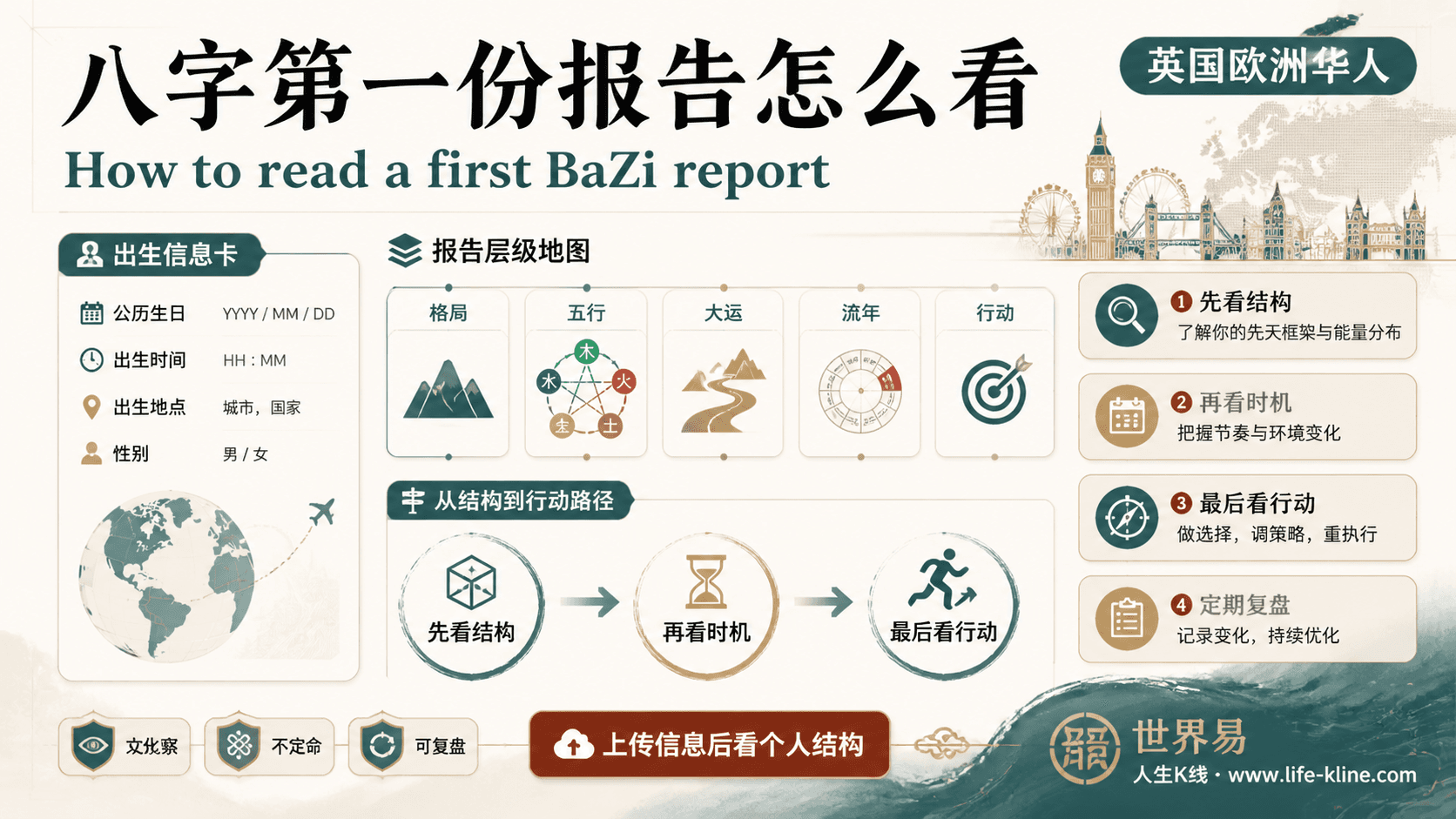
先看完案例关键信息,再进入分析页验证自己的结构与阶段。
Client Background
The client is a young woman in her twenties, currently in the early stage of her career with a fast-paced lifestyle and considerable work pressure. In recent years, she has experienced noticeable emotional fluctuations, occasional chest and hypochondriac distension, and depressive moods. After seeking diagnosis from a Traditional Chinese Medicine practitioner, she was found to have symptoms of liver qi stagnation and was advised to strengthen her health regimen to alleviate symptoms and prevent disease progression.
Her family environment is supportive, but the client herself has limited knowledge about health maintenance and urgently needs clear guidance on the timing and methods of nourishing. She hopes to integrate her BaZi characteristics to identify the most suitable phases for health focus, avoiding blind efforts and achieving more effective results.
BaZi Chart Structure Interpretation
The client’s Day Master is Ren (壬) Water, which is relatively strong and belongs to a specialized strong pattern, indicating abundant inner vitality and active mental and emotional activity. In her BaZi chart, the Ren Water Day Master is supported by Metal, which acts as the Yong Shen (favorable element), helping to balance the strong Day Master energy and regulate emotions and liver qi. Conversely, Fire is the Ji Shen (unfavorable element), prone to triggering emotional volatility and liver qi stagnation, thus requiring control.
Regarding the Da Yun (decade luck cycle), she is currently in the sixth year of the Ren Wu (壬午) Da Yun, where Ren Water emerges alongside Wu Fire. Fire elements are gradually becoming active, but the overall Da Yun remains relatively stable, suitable for steady development. The Liu Nian (annual fortune) is Bing Wu (丙午), where Fire energy is even stronger, intensifying the Ji Shen Fire’s impact on the chart and making liver qi stagnation symptoms more apparent.
Overall, the BaZi structure shows strong Water and Wood energy support. Although Wood is not directly visible, liver qi stagnation belongs to the Wood element. Wood qi is restrained by Fire; when Fire is strong, Wood qi is more prone to stagnation. Metal as the Yong Shen can help resolve the Wood-Fire conflict and is the key direction for nourishment.
Focused Problem Assessment
Liver qi stagnation, as a Wood element issue, must be assessed in the context of the chart’s Fire-strong and Wood-stagnant condition to determine the most critical timing for nourishment. The client is currently in the Ren Wu Da Yun’s phase of increasing Fire strength, and the Bing Wu Liu Nian further intensifies Fire energy. Excessive Fire easily causes liver qi discomfort and aggravates liver qi stagnation symptoms. Therefore, the Bing Wu Liu Nian is a high-risk period for liver qi stagnation and should be the focus of nourishment.
In previous years, Fire energy had not reached this intensity, allowing liver qi some self-regulation, so symptoms were relatively mild or latent. Entering the Bing Wu Liu Nian, strong Fire suppresses Wood, worsening liver qi stagnation, with more pronounced emotional fluctuations and physical discomfort, indicating an urgent need for nourishment.
According to BaZi, the Yong Shen is Metal, which generates Water and overcomes Fire. Nourishing with Metal element therapies can help the client relieve liver qi stagnation and reduce Fire-induced pressure. Thus, nourishment should primarily focus on Metal element health methods combined with liver qi soothing, especially effective during the Bing Wu Liu Nian.
Moreover, Fire intensity may gradually weaken in the coming years, allowing for a moderate relaxation of the nourishment focus. However, the Bing Wu Liu Nian and its adjacent years remain critical periods requiring continuous attention to emotional and liver function status.
Recommended Actions and Timing
Integrating BaZi analysis with TCM diagnosis, it is recommended that the client intensify liver qi stagnation nourishment during the Bing Wu Liu Nian, centering on soothing the liver and relieving depression. This should be supplemented with Metal element health principles, such as increased exposure to Metal-associated environments (e.g., white color, metallic elements) and appropriately wearing metal accessories to enhance Metal qi and promote liver qi circulation.
In daily life, emphasis should be placed on emotional management, avoiding excessive excitement or depression. Moderate exercise like Tai Chi or Yoga can help regulate liver qi. Additionally, the diet should be light, rich in vitamins and trace elements, and reduce spicy and irritating foods that exacerbate Fire energy.
As the Liu Nian enters Bing Wu, quarterly TCM treatments are advised, including acupuncture, tui na massage, and herbal formulas that soothe liver qi, aligned with the BaZi-guided Metal Yong Shen to maximize liver qi relief and symptom reduction.
Maintaining this nourishment rhythm for the next two to three years is advisable. Once Fire energy gradually diminishes, the health regimen can be adjusted to focus more on consolidation and preventive care.
Review and Reminders
While BaZi-based nourishment is targeted, it must be flexibly adjusted according to actual physical conditions, avoiding over-reliance on Metal element remedies while neglecting overall lifestyle improvements. The client should maintain good daily routines, avoid staying up late, and prevent extreme emotional fluctuations, all crucial for liver qi regulation.
Furthermore, BaZi provides trends and directions only. If symptoms become severe or persistent, professional medical consultation is necessary. Self-medication or blindly intensifying health regimens should be avoided to prevent adverse effects.

木过旺与再平衡
这张图把《Analysis of Optimal Timing for Nourishing Liver Qi Stagnation in Young Women》里的命理概念转成关系、边界和应用场景,适合先看图建立结构,再回到案例正文理解细节。
木过旺常表现为扩张过快、计划繁多、方向分散。在人生K线系统中,这是一种时位特征,而非固定标签。通过引入边界、沉淀与复盘,可实现自然再平衡,导向更可持续的结构。
查看图片解读