Five-Element Nourishment and Key Timing Analysis for a 50-Year-Old Male with Chronic Insomnia
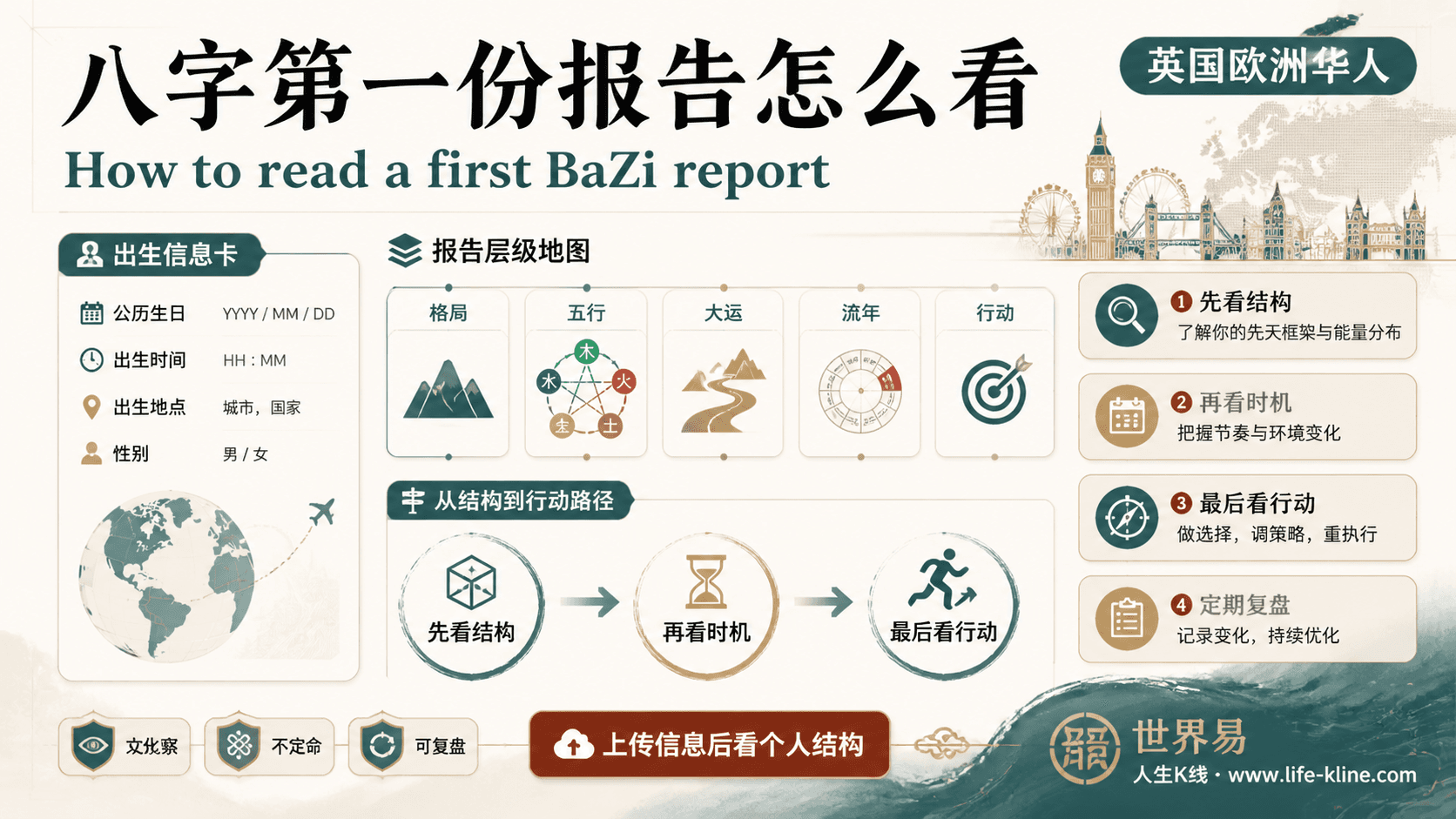
先看完案例关键信息,再进入分析页验证自己的结构与阶段。
Client Background
The client is a middle-aged man over fifty years old, engaged in a managerial position with considerable work pressure. In recent years, he has developed persistent insomnia, with declining sleep quality affecting his daily mental state and physical health. His family life is stable, but emotional fluctuations caused by sleep problems have impacted the family atmosphere.
He seeks to understand the root causes of his insomnia from a traditional metaphysical perspective, hoping to find nourishment methods suited to his constitution. He wishes to clarify at which life stage he should focus on insomnia-related nourishment to maximize symptom relief and improve quality of life.
BaZi Chart Structure Interpretation
The client’s Day Master is Bing Fire (丙火), which is relatively strong, indicating a constitution prone to heat and abundant internal fire. Excessive Fire easily causes restlessness of the Shen (mind/spirit), thereby affecting sleep and forming one root cause of insomnia. Both the Year Pillar and Day Pillar are Bing Chen (丙辰), which further strengthens Fire energy; however, Chen (辰) contains hidden Water, suggesting some internal Water to control Fire, though its strength is limited.
Xin Metal (辛金) emerges in the Month Pillar as a favorable element (Yong Shen), representing the need for more Metal within the client’s body to balance the strong Fire condition. Meanwhile, Water also serves as a Yong Shen, helping to dissipate excessive Fire energy, cooling the Shen and promoting sleep. Wood is an unfavorable element (Ji Shen), appearing as Mao Wood (卯木) in the Month Pillar, indicating Wood’s growth nature exacerbates Fire’s strength, which is unfavorable for nourishment.
Currently, the client is in the Bing Shen (丙申) Da Yun, where Fire and Metal coexist, producing overall stable luck suitable for maintenance rather than major changes. The Liu Nian is Bing Wu (丙午), which further intensifies Fire energy, making the Fire-strong condition more pronounced in the short term and potentially worsening insomnia. Overall, the client’s internal Fire excess requires regulation by Water and Metal to prevent Fire from disturbing the Shen and causing insomnia.
Focused Problem Assessment
Regarding the question of which stage requires focused nourishment, analysis of the BaZi chart along with Da Yun and Liu Nian indicates emphasis should be placed during the peak Fire stages. Although the Bing Shen Da Yun is stable, the early phase involves Fire and Metal contention, with strong Fire easily disturbing the Shen. Particularly, the Bing Wu Liu Nian is a critical year of intensified Fire, likely aggravating insomnia symptoms.
Since the client’s Day Master is relatively strong Fire, representing a constitution prone to heat, and the annual Fire increase adds pressure on the Heart Fire, the most critical nourishment period is from the early to mid-stage of the Da Yun, especially during Fire-strong Liu Nian such as Bing Wu and Ding Wei (丁未) years when Fire is excessively vigorous. Neglecting nourishment during these times may lead to chronic insomnia or even cardiovascular-related illnesses.
Additionally, with aging, the Metal and Water energies in the Five Elements gradually weaken, reducing the ability to counterbalance strong Fire. This decline is especially notable after age fifty, when physical resistance diminishes, making it even more important to supplement and nourish Water and Metal to prevent worsening of Fire-induced Shen restlessness. This period represents a key nourishment window where interventions have significant and lasting effects.
Recommended Actions and Timing
It is first recommended that the client, currently in the early phase of the Bing Shen Da Yun and particularly during the Bing Wu Liu Nian, focus on nourishment centered on Water and Metal. Specific measures include adjusting daily routines to incorporate cooler elements in the evening environment, consuming soups with Yin-nourishing and Fire-reducing effects such as Tremella and lotus seed soup, while avoiding spicy, fried, and other Fire-enhancing foods to reduce Heart Fire intensity.
Secondly, during each Fire-strong Liu Nian, such as Bing Wu and Ding Wei years, proactive physical conditioning is advised to strengthen Lung Metal function and promote internal Water circulation. Complementary breathing and relaxation techniques can help calm the Shen. Avoiding electronic devices before sleep and maintaining a peaceful mind are beneficial for alleviating insomnia.
Finally, over the next five years as the Da Yun progresses into its mid-stage, continued attention to the impacts of strong Fire is necessary. Maintaining Water and Metal as Yong Shen in nourishment practices and assessing physical condition annually with Liu Nian changes is recommended. Consulting professional physicians or traditional Chinese medicine practitioners for coordinated care when needed is advisable. Overall nourishment should focus on preventing Fire disturbance, aligning with the rhythm of Da Yun and Liu Nian, and be scientifically scheduled.
Review and Reminders
During the nourishment process, caution is needed to avoid common pitfalls such as blindly supplementing Wood, which stimulates Yang energy and may worsen insomnia and Heart Fire problems. Also, overly aggressive nourishment measures aimed at rapid results can disrupt existing balance and cause physical discomfort.
Long-term nourishment should follow a gradual and progressive approach, adjusting plans according to BaZi indications and actual personal conditions. Especially during Fire-strong Liu Nian, preventive measures should be taken early rather than intervening only when symptoms become severe. Maintaining good daily routines and psychological state is a key complementary factor to Five Elements nourishment.

木过旺与再平衡
这张图把《Five-Element Nourishment and Key Timing Analysis for a 50-Year-Old Male with Chronic Insomnia》里的命理概念转成关系、边界和应用场景,适合先看图建立结构,再回到案例正文理解细节。
木过旺常表现为扩张过快、计划繁多、方向分散。在人生K线系统中,这是一种时位特征,而非固定标签。通过引入边界、沉淀与复盘,可实现自然再平衡,导向更可持续的结构。
查看图片解读